
Subaru No-Start Diagnosis: Starter, Alternator & Ignition Parts
A Subaru that clicks, cranks slowly, starts hard, misfires, or shows a battery warning light may have a charging, starter, ignition, or fitment-related issue. For Outback, Forester, Crosstrek, WRX, and older Subaru models, a step-by-step diagnosis helps protect the AWD system, avoid unnecessary parts spending, and keep the vehicle dependable in wet, cold, or rough driving conditions.
Subaru starting issues can look alike
Subaru owners often notice the same basic symptoms: one click and no crank, repeated clicking, slow cranking, a crank-no-start condition, rough running after startup, flickering lights, or a battery light on the dash. The challenge is that one weak area can make another part look bad. A weak battery or charging issue can seem like a bad starter. A crank-no-start issue can seem like a charging problem when the real concern is spark delivery.
For daily drivers and outdoor-use vehicles, ignoring these symptoms can leave you stranded in bad weather, at a trailhead, or during a commute. Using OEM Subaru parts also helps maintain proper fit, electrical compatibility, and reliability without guessing on aftermarket alternatives.
Subaru starting, charging, and ignition parts work as a system
The battery provides power at startup. Once the engine runs, charging components keep voltage stable so lights, modules, sensors, and ignition parts can operate correctly. If charging output drops, the battery may not recover after short trips or cold starts.
The starter circuit then uses that available power to crank the engine. If the engine cranks normally but will not fire, the diagnosis usually moves toward ignition and spark delivery. On older Subaru models, age, corrosion, heat, and mileage can affect plugs, caps, rotors, contacts, distributors, connectors, grounds, and related hardware.
Fitment matters because Subaru parts can vary by year, model, engine, trim, drivetrain, and production details. That is especially important when maintaining AWD vehicles where dependable electrical function supports everyday safety, winter use, and long-distance reliability.
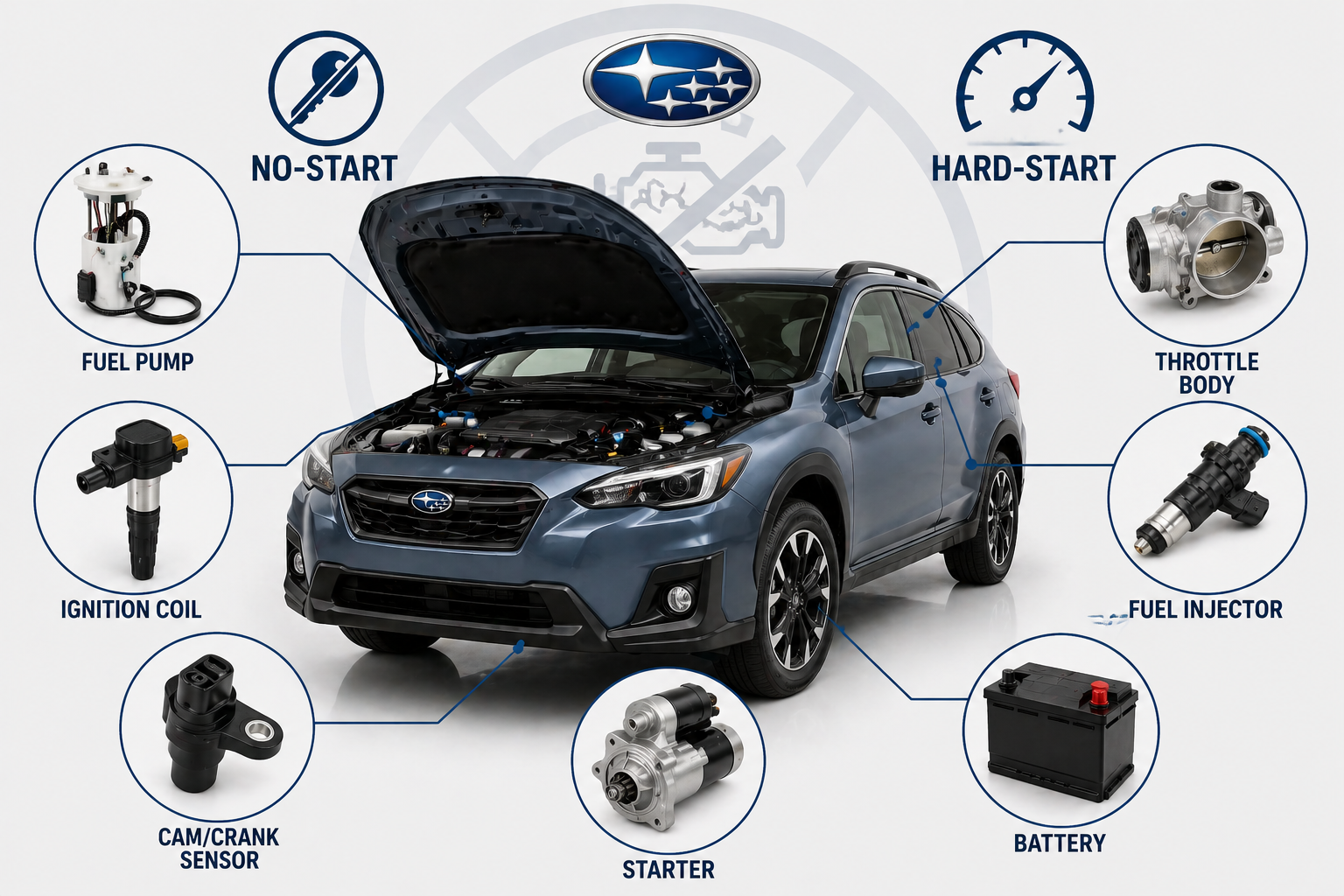
A step-by-step solution before buying parts
- Identify the exact symptom. Separate no-crank, slow-crank, crank-no-start, hard-start, and misfire complaints.
- Test battery condition and charging output before replacing ignition parts.
- Inspect terminals, battery cables, grounds, and visible corrosion.
- Listen for starter behavior such as one click, repeated clicking, grinding, or intermittent engagement.
- If the engine cranks but will not start, check spark delivery and ignition wear items.
- Review dashboard warnings, stored codes, and recent repair history.
- Confirm Subaru year, model, engine, trim, AWD configuration, and production details before ordering.
- Choose OEM parts when possible to support proper fit, connector match, and long-term reliability.
Recommended Subaru parts for common no-start and hard-start repairs
If testing points to low charging output, bearing noise, dim lights, or repeat jump-starts, inspect Subaru alternators and generators. Some repairs may also need related alternator and generator parts based on the failure point.
Unstable voltage should not be ignored. Voltage regulators help prevent undercharging, overcharging, flickering lights, and stress on sensitive electrical components.
For clicking, grinding, or intermittent crank concerns, review Subaru starter parts after confirming battery condition, cable health, and ground connections.
When the engine cranks but does not start cleanly, inspect ignition service items. Subaru spark plugs and glow plugs are common maintenance parts for hard starts, misfires, and rough running. Older applications may also need ignition caps, rotors, and contacts or distributor parts when wear or corrosion affects spark delivery.
If access or spare-key needs come up during repair planning, Subaru key blanks may help support practical ownership needs.
Subaru categories and model-year pages
Use Subaru category pages to compare OEM-style parts by system before ordering. Charging and starting categories are useful for alternator, regulator, and starter diagnosis. Ignition categories help narrow spark-related repairs when the engine cranks but will not start.
For older Subaru maintenance, model-year pages can also reduce fitment mistakes. Owners maintaining classic or aging vehicles can start with 1993 Subaru parts. High-mileage daily drivers may use 2002 Subaru parts to narrow replacement options by year before confirming model, engine, and trim.
Frequently Asked Questions
Why does my Subaru click but not start?
A click often points to low battery voltage, poor cable connections, weak grounds, or starter engagement trouble. Test the battery and inspect the cables before replacing the starter.
Can a bad alternator cause a no-start condition?
Yes. A failing alternator may not recharge the battery properly, leaving the vehicle too weak to crank after sitting, cold weather, or repeated short trips.
How do I know if the starter or ignition is the problem?
If the engine does not crank, start with the battery, cables, grounds, and starter circuit. If it cranks normally but will not fire, inspect spark delivery and ignition components.
Should I use OEM Subaru ignition and charging parts?
OEM parts are built for the original Subaru application, which helps with fit, connector compatibility, sealing, and dependable operation in everyday and all-weather driving.
Are older Subaru parts different by model year?
Yes. Older Subaru ignition and charging parts can vary by year, model, trim, engine, and production details, so fitment confirmation is important before ordering.